
Square One Counseling, Inc.
Grief is not a disorder and it does not need curing. But it can be carried more bearably, and there are points where having somewhere to put it makes a real difference.
The familiar five stages were never intended as a sequence people pass through, and treating them as a schedule mostly makes the bereaved feel they are doing it wrong. Real grief arrives in waves, doubles back, and is set off by things you could not have predicted — a voice, a smell, a Tuesday.
There is also no correct duration. The common expectation that a year should settle it leaves many people concealing grief that is still entirely live in year two and three.

Sadness and longing, certainly, but also numbness, disbelief, exhaustion, anger — at the person, at others, at yourself — and guilt about what was or was not said. Also relief, particularly after a long illness, which people often find shameful and rarely admit to. Relief and love are not in conflict.
Physical effects are common too: disrupted sleep, appetite change, and difficulty concentrating.
Some grief goes unsupported because the loss is not socially acknowledged — miscarriage and infertility, the death of an ex-partner or an estranged parent, losing a pet, a friend’s death, or the death of someone you had a difficult relationship with.
Grief also follows losses that are not deaths: the end of a marriage, a diagnosis, a career ending, or the dementia of someone still alive. These are real and they are worked with here.
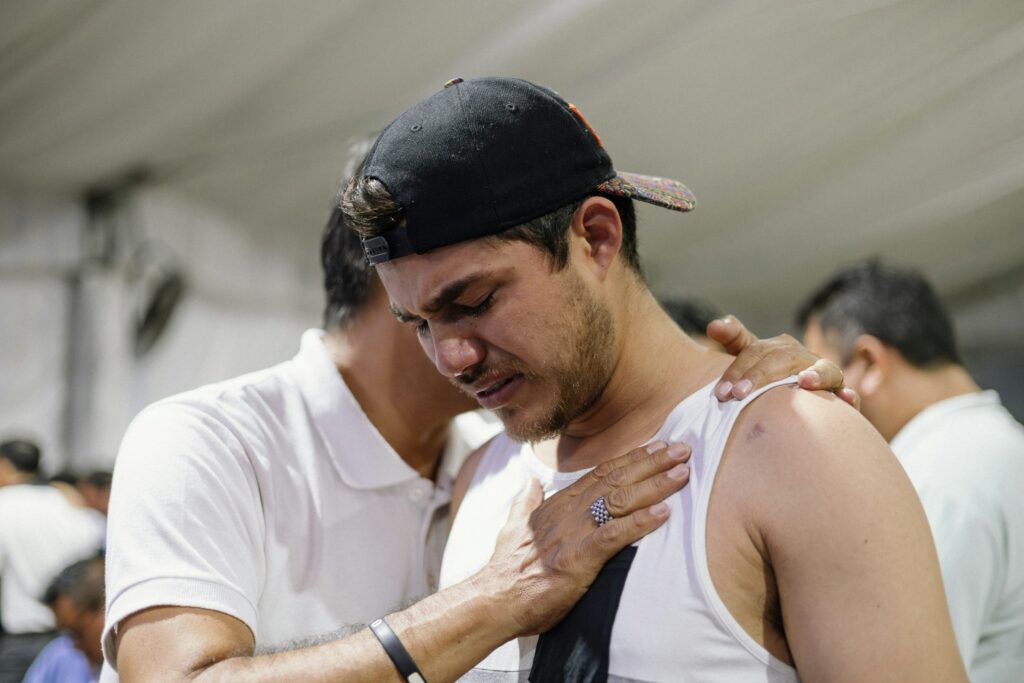
There is no threshold you must cross. That said, counseling is particularly worth considering when grief is not shifting at all after a long period, when it is accompanied by significant depression, when guilt or anger has become consuming, when the death was sudden or traumatic — in which case there may be trauma alongside the grief — or simply when the people around you have moved on and you have run out of places to say it.
Primarily, room. A place where the loss can be spoken about without managing anyone else’s discomfort, and without the pressure to demonstrate progress.
Beyond that: making sense of reactions that feel frightening or shameful, working through guilt and unfinished business, and finding a way to carry the relationship forward rather than being asked to let go of it. Where grief has shaded into depression or trauma, those are treated directly.
Sessions in West Des Moines or by telehealth across Iowa. See insurance and fees, or call (515) 599-1833.
Reviewed by James Bustamante, MA, LMHC — Licensed Mental Health Counselor in Iowa (license 00424), Square One Counseling, Inc., 950 Office Park Rd. Suite 335, West Des Moines, IA 50265. (515) 599-1833
In crisis? This page is educational and is not a substitute for emergency care. If you or someone else is in immediate danger, call 911. For mental health crisis support, call or text 988 (Suicide & Crisis Lifeline), available 24/7.
At Square One, we believe your wellbeing is defined by you. Whether you’re navigating stress, working through past experiences, or wanting to strengthen your relationships, you don’t have to do it alone.